Bone and Joint Health in Winter: An Ayurvedic Approach to Pain-Free Joints
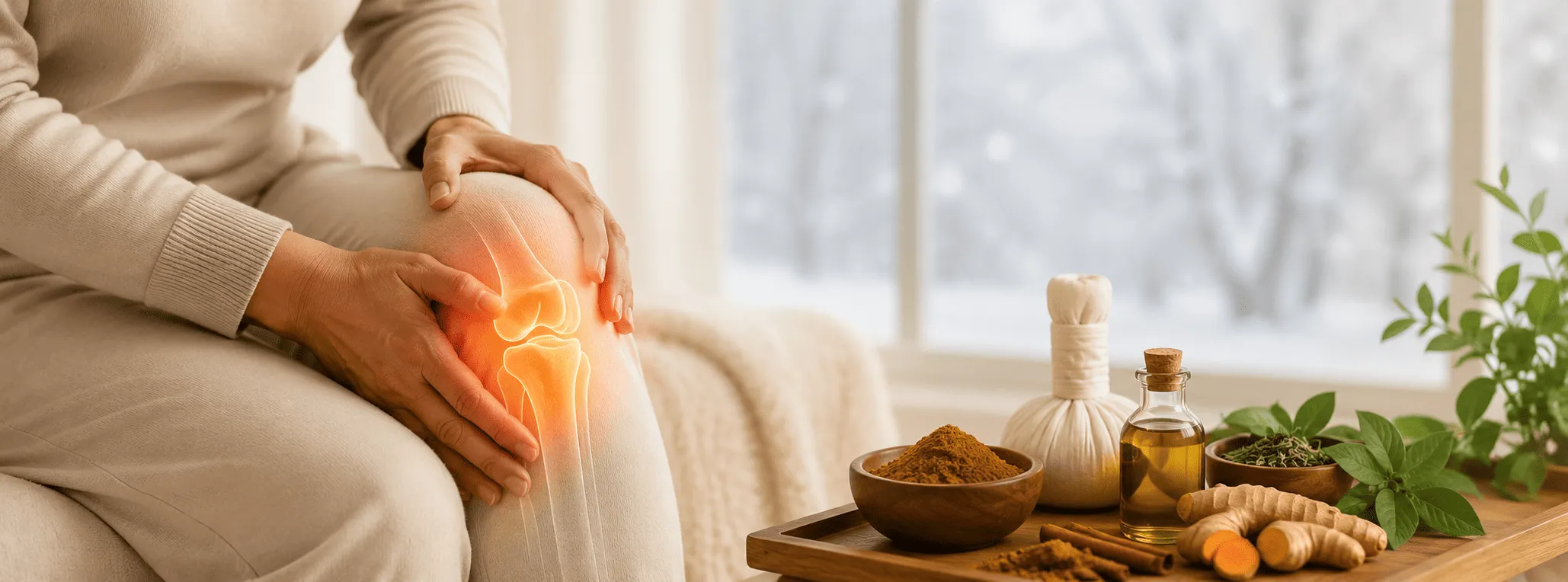
The cold makes the fluids in your joints expand and your soft tissues swell, irritating the nerves around them and causing stiffness or pain. This is why you may experience joint pain in the winter. In Ayurveda, this is explained as an aggravation of vata dosha, the cold, dry, mobile energy that governs movement in the body. The result is dry, stiff, inflamed joints, especially for those who suffer from arthritis. The best relief comes from a combination of vata-pacifying dietary changes, warmth-based Ayurvedic therapies and regular gentle movement.
Why Your Joints Hurt More in the Winter
In my practice I’ve seen several physiological factors combine to exacerbate joint pain in the colder months:
- Drop in the atmospheric pressure causing expansion of joint fluid and surrounding tissue
- Cold induced increase in pain receptor sensitivity
- Decreased blood flow to fingers and toes
- Muscle spasms & inactivity, stiffness builds up over time
- Less sun = less vitamin D
These factors are not independent of each other; they are additive. That’s why winter joint pain can be worse than seasonal discomfort at other times of year.
The Ayurvedic View: Insight Into Vata Imbalance
According to Ayurveda, vata dosha governs all movements of the body such as joint movement and nerve function. Vata is made up of the qualities of cold, dry and light which are much more intensified during the winter season. When cold, dry weather aggravates vata beyond its natural balance, it will manifest as joint dryness, stiffness, pain and inflammation in the body.
Most of my patients who come to me with winter joint pain have a vata imbalance, not a purely mechanical problem. Ayurvedic care works in the long run as it corrects the root imbalance and not just the symptom.
Hence, Ayurvedic treatment is not about symptom management but restoration of balance through warmth, nourishment and grounding practices.
Lifestyle and Diet Changes to Help Protect Your Joints
Keep Moving Your Body
Gentle, regular movement such as stretching, yoga, Pilates or light exercise helps to keep muscles and bones strong, maintain joint flexibility and reduce stiffness build up.
Make Vitamin D a priority
Vitamin D is important for bone health, especially in the winter when natural sunlight is limited. Supplementation when needed under physician supervision and safe sun exposure compensate for seasonal deficit.
Spice Up Your Nutrition
Include calcium-rich foods like milk, spinach, and almonds; antioxidant-rich fruits and vegetables to slow joint degeneration; and omega-3 sources such as fatty fish, along with turmeric, garlic, berries, broccoli, nuts, seeds, citrus, olive oil, and green tea.
Limit sugary foods, processed meats, refined carbs, packaged snacks, eggplant, trans fats and excessive alcohol—all known to contribute to inflammation.
Supporting Habit
- Keep a healthy weight to reduce pressure on your joints
- Get enough sleep to repair tissues
- Wear warm layers and appropriate footwear
- Drink plenty of water
Ayurvedic Treatments I Suggest
- Abhyanga (oil massage) – Heats the body and lubricates joints
- Herbal poultice treatments – helps reduce inflammation and stiffness
- Swedana (steam therapy) – enhances circulation, relieves tension
- Local herbal applications — targeted to specific areas of pain
- Yoga poses for particular joints — restores flexibility and mobility
These therapies directly oppose the cold, dry quality of vata. And that’s why they are so good for winter-specific joint complaints.
Frequently Asked Questions (FAQs)
Why do joints hurt more in cold weather?
Cold weather makes joint fluid expand and soft tissue swell, irritating nearby nerves. In Ayurveda , this is linked to aggravation of vata dosha which can cause dryness , stiffness and inflammation.
Ayurvedic Treatment For Joint Pain In Winter?
Ayurveda recommends abhyanga (oil massage), swedana (steam therapy), herbal poultice treatments, and yoga for specific joints. A diet that balances vata with warm, nourishing foods is also suggested.
Can diet really help with winter joint pain?
Yes. High-calcium foods, omega-3s and antioxidants promote joint health. Processed foods, refined carbs and trans fats can increase inflammation.
Should I see a doctor about joint pain in winter?
If you are suffering from chronic or severe joint pain then you should consult an Ayurvedic doctor who can diagnose you and prescribe a treatment plan according to your dosha constitution.
Joint pain in winter doesn’t have to be something you just have to live with. When you understand the connection to vata dosha and combine Ayurvedic therapies with the right diet and lifestyle habits, you can stay active and comfortable all season long. If you want a detailed assessment, you may book a consultation with me at Kottakkal Ayurveda branch, Ajman.
About the Authors
Dr. Nasreen Thacham Poyil is an Ayurvedic Physician at Kottakkal Ayurvedic Treatment Centre, Ajman. She is a graduate of VPSV Ayurveda College, Kottakkal and treats a variety of conditions from musculoskeletal to dermatological to gastrointestinal, gynecological and neurological problems. She also has specialization training in Ayurvedic gynecology, yoga instruction and Smrithi meditation.
📍 Kottakkal Ayurvedic Treatment Centre, Ajman | Book Consultation
Book Appointment
Request slot for Ayurvedic Consultation